Telesolutions Call Central

Telesolutions Call Central Header
Business Communication · Call Handling

Inbound vs Outbound Calls: Complete Comparison Guide

Inbound and outbound calls serve different purposes, but both are important parts of business communication. Inbound calls are calls your business receives from customers, prospects or other callers. Outbound calls are calls your business makes to customers, prospects or contacts. This guide explains the difference between them, how each works, where they are used, and how professional call handling can support a growing business.

Two Directions, One Journey

The Simplest Difference

Who Starts the Call And Why It Is Taking Place

Inbound

Customer Starts the Call

Outbound

Business Starts the Call

The Quick Answer

Inbound And Outbound Calls at a Glance

The difference goes beyond who starts the call. Inbound calling is usually focused on responding to a need that already exists, while outbound calling is used to create, continue or prompt an interaction.

Area

Inbound Calls

Who Starts the Call
The customer or prospect starts the call
Purpose
Usually responds to an existing need
Typical Conversations
Customer support and enquiries
Appointments
Booking and appointment requests
Service Issues
Complaints and service requests
Information
Technical or product questions
Main Focus
Focuses on responsiveness

Outbound Calls

Who Starts the Call
The business starts the call
Purpose
Usually creates or progresses an interaction
Typical Conversations
Follow-ups, sales and proactive communication
Appointments
Appointment confirmations and reminders
Service Issues
Customer feedback and reactivation
Information
Lead follow-up and prospect outreach
Main Focus
Focuses on proactive engagement

In short: inbound calls bring customer demand to your business; outbound calls take your business communication to the customer.

Discuss Your Call Handling

What Are Inbound Calls?

An inbound call is a telephone call received by a business from a customer, prospect, supplier or other contact. The caller may need information, support, a booking, an update, assistance with an existing service or help resolving a problem.

Customer enquiries New service enquiries Booking requests Appointment scheduling Customer support Complaints Order or delivery enquiries Service requests Technical assistance General business enquiries
The Caller Has Already Decided to Contact You

That makes the quality and speed of the response particularly important. If the caller cannot reach someone, has to wait too long or receives unclear information, the business can lose the opportunity before the conversation even begins.

What Are Outbound Calls?

An outbound call is initiated by a business or its representative. Instead of waiting for someone to contact the company, the business proactively contacts a customer, prospect or other contact.

Sales conversations Lead follow-ups Appointment reminders Booking confirmations Customer feedback Surveys Service updates Renewal conversations Customer reactivation Payment-related communication
Proactive Rather Than Reactive

The purpose is usually to start a conversation, provide an update, encourage an action or continue an existing customer relationship.

Who Initiates, and Why

Inbound & Outbound Calls: What Is the Main Difference?

The main difference is who initiates the conversation and why the conversation is taking place. With an inbound call, the customer has already taken action by contacting your business. With an outbound call, the business takes the first step. That creates a different communication environment.

The Inbound Conversation

  • The caller may already be interested in your service
  • They may need an answer or require immediate assistance
  • The priority is to understand the reason for the call
  • The priority is then to respond effectively

The Outbound Conversation

  • The caller may need to introduce a reason for contacting the customer
  • Relevance has to be established
  • The conversation is guided toward the intended outcome
  • Different workflows, preparation and handling are required
The Workflow

Inbound Call Handling vs Outbound Call Handling

The difference becomes clearer when you look at the actual workflow. For businesses, both workflows need structure. Without clear processes, calls can become inconsistent, information can be missed and follow-up tasks can fall through the cracks.

Inbound Call Handling

The objective is to make sure the caller reaches the right outcome without unnecessary delay.

Customer Calls
↓
Call Is Answered
↓
Caller's Needs Are Identified
↓
Information or Assistance Is Provided
↓
Booking, Transfer, Message or Next Action Is Completed

Outbound Call Handling

The objective is to proactively move the conversation forward.

Contact Is Selected
↓
Reason for Calling Is Identified
↓
Call Is Placed
↓
Conversation Takes Place
↓
Outcome Is Recorded
↓
Follow-Up Action Is Completed
Why Each One Matters

Why Inbound and Outbound Calls Matter to Your Business

An inbound call is often more than a request for information. It can be a potential customer asking for a quote, an existing customer needing help, someone trying to book a service or a customer looking for an urgent answer. Outbound calls, meanwhile, allow businesses to communicate proactively rather than waiting for the customer to make contact.

A Professional Inbound Process Can Help You

  • Respond to enquiries consistently
  • Reduce missed customer calls
  • Manage customer questions
  • Handle bookings and appointments
  • Support customers outside normal office hours
  • Reduce pressure on internal staff
  • Maintain a consistent communication process
  • Capture important customer information
  • Route calls to the appropriate person or department

Outbound Calling Can Support

  • Lead follow-up
  • Sales activity
  • Appointment reminders
  • Customer retention
  • Feedback collection
  • Service updates
  • Customer reactivation
  • Confirmation processes
Answering the Phone Is Part of the Customer Journey

For businesses receiving regular telephone enquiries, answering the phone is not simply an administrative task. And the effectiveness of an outbound call depends heavily on relevance and timing: a poorly targeted call can feel disruptive, while a useful and well-timed call can make the customer journey easier.

No Universal Answer

Which One Does Your Business Need?

The right approach depends on what your customers need from your business. If customers regularly call to ask questions, make bookings, request support or resolve issues, inbound call handling should be a core part of your communication process. If your business needs to proactively contact customers or prospects, outbound calling may form part of your sales or customer engagement process.

Many businesses have both types of communication. The important thing is to make sure each call has a clear process behind it.

A Familiar Problem

When Inbound Call Handling Becomes a Business Problem

Inbound calls can become difficult to manage when your internal team is already busy. The customer is ready to speak, but nobody is available to answer.

The Reception Desk

A receptionist may be serving someone in person while the phone rings.

The Sales Line

A sales employee may be on another customer call.

On the Road

A business owner may be travelling between appointments.

A Small Team

A small team may simply not have enough people available to answer every call.

Professional outsourced call handling can provide an additional layer of support without requiring your internal team to manage every incoming call themselves.

Add Call Handling Capacity
An Extension of Your Business

How Professional Inbound Call Handling Works

With an outsourced inbound call centre, trained agents can act as an extension of your business. Depending on your requirements, the call handling process can include the following.

Answering Incoming Calls Professionally Following Your Agreed Instructions Identifying the Reason for the Call Handling Routine Enquiries Taking Accurate Messages Managing Bookings or Appointments Escalating Calls When Necessary Recording Relevant Information Out-of-Hours Customer Support Consistent Communication Standards
More Than Simply Answering the Phone

The purpose is to create a reliable process around every incoming customer conversation.

Around the Clock

24/7 Inbound Call Handling for UK Businesses

Customers do not always contact a business during convenient office hours. Depending on the industry, enquiries can arrive early in the morning, during evenings, at weekends or outside normal operating hours.

TeleSolutions Call Centre provides 24/7 inbound call centre support for businesses that need continuous customer communication. Its service includes handling customer enquiries, complaints and service requests, with trained agents and structured workflows. This can be particularly useful when your internal team needs to focus on its core work while customers still need access to professional telephone support.

Need your business calls covered around the clock? Talk to TeleSolutions Call Centre about a 24/7 inbound call handling solution designed around your workflow.

Ask About 24/7 Call Handling

Inbound Call Handling for Appointments and Bookings

For appointment-based businesses, an inbound call can quickly become a booking opportunity. TeleSolutions Call Centre provides appointment scheduling and calendar management, including booking support, conflict avoidance and reminders.

Make an appointment Change an appointment Confirm a booking Ask about availability Cancel a booking Request information before booking
Call Handling Becomes Part of the Booking Process

Rather than simply taking a message and asking someone internally to call the customer back.

If phone bookings are taking your team away from the work that matters, TeleSolutions Call Centre can manage the conversation and scheduling process for you.

Outsource Your Booking Calls
Support Across Channels

Inbound Calls, Customer Support and Multi-Channel Communication

Inbound vs Outbound Calls: Complete Comparison Guide

Customer support calls often require more than a basic greeting. Customers may have questions, complaints or service requests that need to be understood and handled correctly. TeleSolutions Call Centre provides inbound call handling for customer enquiries, complaints, service requests and general support, supported by quality assurance and call monitoring processes. A structured approach helps create consistency across customer interactions.

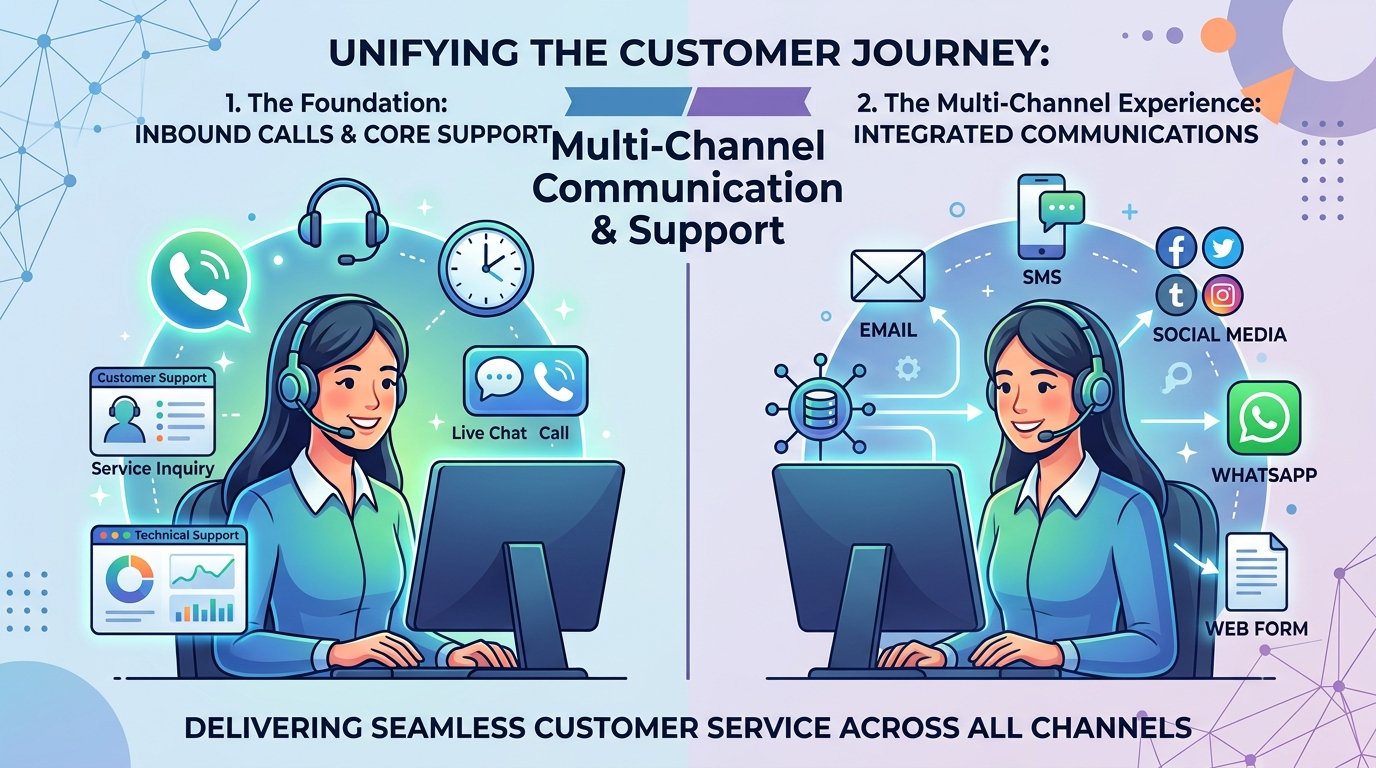
Phone calls are only one part of modern customer communication. Customers may also contact a business through live chat or email. TeleSolutions Call Centre provides inbound call centre support alongside live chat and email support, allowing businesses to use multiple customer communication channels through an outsourced support model. For businesses receiving enquiries across several channels, this can help reduce the pressure of managing every customer interaction internally.

Customer Enquiries Complaint Handling Service Requests General Support Quality Assurance Call Monitoring Live Chat Email Support

Want one support partner across phone, chat and email? Speak with TeleSolutions Call Centre about a tailored customer communication setup.

Build Your Support Setup
Continuity Is the Key

How Inbound and Outbound Calls Work Together

Inbound and outbound calls should not always be viewed as competing approaches. They can form different parts of the same customer journey.

Example One

  • Outbound: a business contacts a customer to confirm an appointment
  • Inbound: the customer later calls with a question about that appointment

Example Two

  • Inbound: a prospect calls after finding the business online
  • Follow-up: the business may need to contact the prospect again after the initial enquiry
The Key Is Continuity

A business should know what information was collected, what the customer needs and what action should happen next.

More Than Calls Answered

The Business Impact of Better Call Handling

The value of professional call handling is not simply the number of calls answered. It is what happens because those calls are handled properly.

Area · Business Result

Response Speed
↓
Respond faster to customers
Internal Workload
↓
Reduce pressure on internal employees
Communication Standards
↓
Maintain consistent communication
Appointments
↓
Manage appointments more effectively
Information Capture
↓
Capture customer information accurately
Availability
↓
Provide support beyond normal office hours
Customer Experience
↓
Create more reliable customer experiences
Scalability
↓
Scale customer communication as demand changes
One Combined Support Model

TeleSolutions Call Centre combines inbound call centre operations with services including appointment management, email support, live chat, record keeping and quality assurance.

A Practical Example

Inbound And Outbound Calls: A Practical Example

The difference is simple, but the handling process behind each call can be very different.

An Inbound Call

  • A customer finds your business online and calls
  • They want to know whether you can provide a particular service
  • The customer already has an intention
  • Your job is to answer, understand the enquiry and help them take the next step

An Outbound Call

  • Your business contacts an existing customer
  • The reason is to confirm an upcoming appointment
  • The business has initiated the conversation
  • There is a specific reason to contact the customer
Where the Pressure Is

What Should You Outsource?

Businesses do not necessarily need to outsource every telephone interaction. A more practical approach is to identify where calls are creating operational pressure. Outsourcing may make sense in the situations below — the goal is to create capacity while maintaining a professional customer experience.

Calls Are Regularly Missed Staff Frequently Interrupted by the Phone Customers Need Support Outside Office Hours Unpredictable Call Volumes Booking Calls Take Too Much Employee Time Support Without a Larger Internal Team Growth Outpacing Communication Processes
Why Choose TeleSolutions Call Centre

Why Choose TeleSolutions Call Centre for Inbound Call Handling?

TeleSolutions Call Centre focuses on helping businesses manage customer communication through professional inbound call centre and business support services. The service is designed to work as an extension of your business rather than as a disconnected answering operation.

24/7 Inbound Call Handling Customer Enquiries Complaint Handling Service Requests Appointment Management Live Chat Email Support Record Keeping Quality Assurance

The Stated Process

That approach allows call handling to be structured around how your business actually operates.

Requirement Analysis
↓
Workflow Design
↓
Agent Training
↓
Integration
↓
Live Service Delivery
↓
Performance Monitoring

If your team is spending too much time answering calls — or customers are waiting too long for a response — TeleSolutions Call Centre can help you build a more reliable inbound call process.

Build a Reliable Call Process
Common Questions

Frequently Asked Questions

The questions businesses ask most often before choosing how to handle their calls.

Inbound calls are received by a business from customers or other callers. Outbound calls are initiated by the business. Inbound calls commonly involve support, enquiries and bookings, while outbound calls commonly involve follow-ups, reminders, sales or proactive customer communication.

Not always. An inbound call can be a customer service call, but it can also be a sales enquiry, booking request, complaint, appointment request or general business enquiry.

Outbound calls can be used for sales, lead follow-up, appointment reminders, confirmations, customer feedback, service updates, renewals and other proactive communication.

Inbound calls often occur when a customer or prospect has already taken the step of contacting the business. Handling those calls promptly and professionally helps businesses respond to enquiries, support customers and manage opportunities effectively.

Yes. Businesses can outsource inbound call handling to a professional call centre so trained agents can answer calls, handle agreed enquiries, take messages, manage appointments and follow defined escalation processes.

Yes. TeleSolutions Call Centre states that it provides 24/7 inbound call centre support for customer enquiries, complaints, service requests and general support calls.

Yes. TeleSolutions Call Centre provides appointment scheduling and calendar management, including bookings, confirmations, reminders and scheduling coordination.

Yes. Its current services include live chat and email support alongside inbound call centre services.

The right approach depends on call volume, customer requirements, business hours, staffing and the complexity of the calls. A structured process should define how calls are answered, handled, recorded, transferred, escalated and followed up.

The Bottom Line

Ready to Improve How Your Business Handles Incoming Calls?

Inbound calls respond to customers who contact your business. Outbound calls allow your business to proactively contact customers and prospects. For businesses with regular customer enquiries, bookings or support requests, the quality of inbound call handling can have a direct effect on the customer experience. If your internal team cannot reliably answer every call, outsourcing the process can provide additional capacity without putting every customer conversation on your existing employees. TeleSolutions Call Centre provides 24/7 inbound call centre support, appointment management, live chat, email support and quality assurance for businesses that need a more reliable customer communication process.

Discuss Call Handling